
A simple sourdough starter recipe with real advice for hot climates, atta flour in desi kitchens.
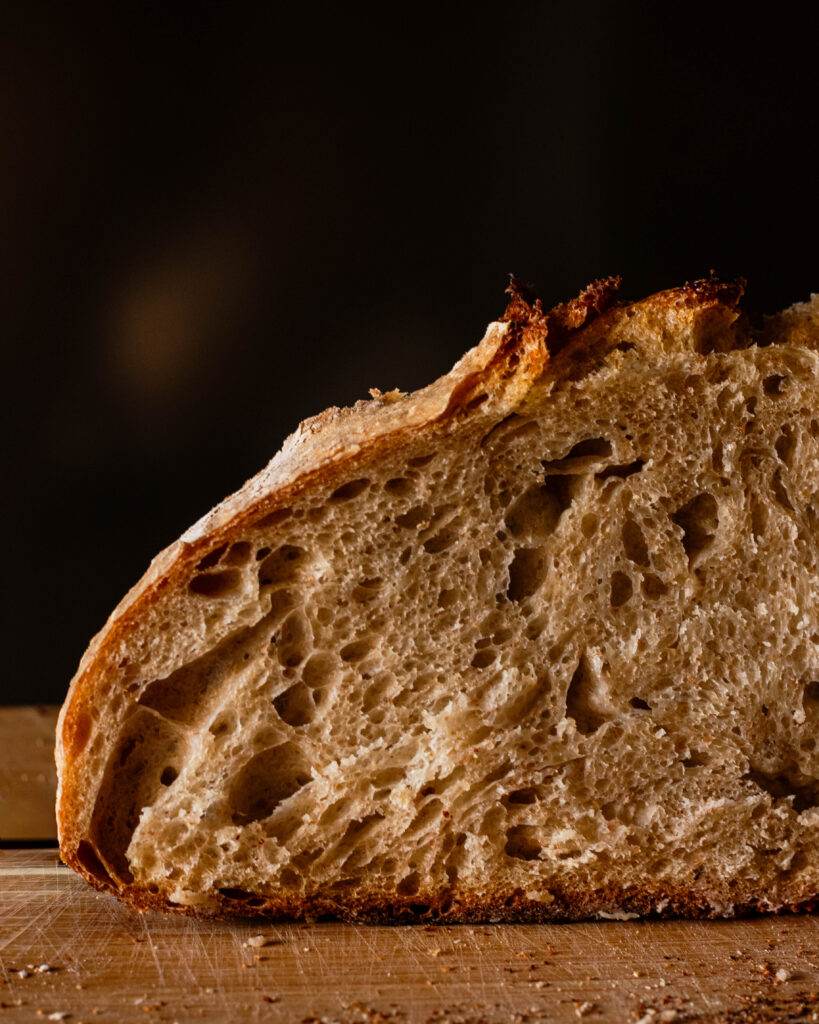
Sourdough starter is just flour, water, time and patience but the internet makes it sound like you need a science degree and a well- equipped kitchen to get it right. You don’t. I started my sourdough journey during Covid like everyone else but couldn’t develop the taste. What’s the point of baking something which no one would eat. Come 2024, my visit to USA to my sister’s when she requested me to make sourdough and I was like I am not sure. She gifted me a sourdough starter kit and rest is history. So this starter of mine is called ‘Noor’ and is almost 2 years old.
Table Of Contents
- Ingredients at a glance
- How do you make a sourdough starter from scratch?
- FAQs
- Substitutions and Variations
- Storage and Make Ahead
- What to do with your starter once it’s ready
Ingredients at a glance
For the starter – whole wheat flour or atta, all-purpose flour or maida, filtered or bottled water
That’s it. No yeast packet, no starter culture ordered online, no special jar required (though I’ll tell you what I use). Everything else is time and patience.
Tools and Equipment
A clean glass jar with a lid – any jam/honey/coffee bottle will do
A spatula/ butter knife to stir
A weighing scale – important one, a cheap kitchen scale will save you more grief than any other tool in this process.
A spoon to put in flour
A rubber band
A permanent marker – weigh your jar without lid and write the number in grams
Important Tips before you begin
- For the following steps – just determine one time that you can be consistent with. I usually choose morning between 7 AM – 9 AM.
- In winters, I keep the starter near the stove/oven/burner in the kitchen or sometimes in microwave with light on and door ajar. In summers I keep it in my living room. The ideal temperature is 75F or 24C .
- Cover means cover loosely means a cloth with a rubber band, or a jar lid resting on top, not screwed shut.
- Keep a separate old jar marked clearly with discard and collect from day 1 – 15, you will have to throw away this discard. After your establish has establish you can collect the discard during feeding and use in various recipes.
How do you make a sourdough starter from scratch?
Day 1 – In a clean glass jar, mix 30g whole wheat flour or atta, 30 g flour or maida with 60g room-temperature water until you get a thick, pasty consistency, like pancake batter. Cover and leave somewhere warm, out of direct sun, for 24 hours.
Day 2 – You probably won’t see much happening yet, and that’s normal. Don’t panic and don’t add more flour. Just leave it another 24 hours.
Day 3 – You should start seeing a few bubbles, maybe a slightly sour or yeasty smell. Discard half the mixture (60g), then feed what’s left with 40g flour and 40g water. Stir well, cover, and wait 24 hours.
Day 4 – Discard 110g and feed the remaining 30g with 50g water and 50g flour. Stir, cover and keep.
Day 5 -12 – Discard 100g and feed the remaining 30g with 50g water and 50g flour. Stir, cover and keep.
Day 13 and 14 – Discard 100g every 12 hours, feed 30g with 80g water and 80g flour. Stir, cover and keep.
Day 15 – Morning – Take a fresh jar, place 30g starter, 80g water,80g flour, stir, cover and keep. Check if it is doubling in 4-6 hours. Night – Discard 140g starter, mix 50g starter, 70g water, 70g flour, stir, cover and keep.
Day 16 – you can attempt at making bread today. My complete recipe of basic sourdough bread is here.
Day 16 – Day 90 – Three months is a great time to establish a strong starter. During this time you should feed your starter by 1:1:1 to 1:2:2 to 1:3:3 ratios, collecting discard and using it in various other recipes. For example, 30g starter, 90g water, 90g flour, stir, cover and keep at room temp everyday.
FAQs
Is sourdough starter halal to eat?
This is the question I get asked more than any other, so let’s actually answer it properly instead of glossing over it. Yes – sourdough starter and sourdough bread are considered halal by the overwhelming majority of scholars. Here’s why: during fermentation, wild yeast does produce a small amount of ethanol as a natural byproduct – that’s what the liquid layer on top (“hooch”) is. But this is incidental fermentation, not deliberate alcohol production, and it happens in vanishingly small, non-intoxicating amounts, most of which evaporates further during baking at high heat. The general Islamic principle is that trace, non-intoxicating alcohol produced as a byproduct of a halal process (like fermenting bread, or the natural fermentation in some fruit juices) doesn’t make the food haram. If the hooch bothers you visually, just pour it off or stir it back in before feeding – either is fine, it doesn’t affect halal status either way.
Can I make a starter with atta instead of bread flour or maida?
Yes, and honestly I’d encourage it. Atta (chakki atta, the whole wheat flour we use for roti) is what I use most often, and starters made with it tend to get active faster than ones made with refined white flour, because whole grain flour carries more of the natural yeast and bacteria that get the fermentation going. The only difference is your starter will be denser and thicker — more like thick yogurt than pancake batter. If you want a lighter, more liquid starter later on, you can gradually switch to maida or a mix of the two once it’s established.
My starter is going crazy fast — bubbling and doubling within a couple of hours. Is that normal in our heat?
Completely normal, and something almost every sourdough post written in the US or UK doesn’t prepare you for. Anything above 28-30°C speeds fermentation up significantly, and in a Karachi or Riyadh kitchen in summer you’re often well past that even with the AC on. A fast, overactive starter isn’t a broken starter – it’s just hungry more often. If it’s collapsing (rising and then falling flat) before you get to feed it, switch to twice-daily feeding, use cooler water straight from the fridge, and keep it in your coolest spot, not right next to the stove or a sunny window.
How do I keep my starter alive through load shedding, when I can’t rely on the fridge?
This one’s genuinely not covered anywhere else, so here’s what’s worked for me. A starter can sit at room temperature for far longer than people think without dying – even 8 to 12 hours without power isn’t going to kill it, it’ll just get hungrier and more sour. If outages are unpredictable, keep your starter slightly under-fed rather than freshly fed (less food means it won’t crash as fast), and don’t stress about a strict schedule. If it develops a strong vinegary smell or a layer of dark hooch after a long outage, just discard a bit more than usual and feed it – it’ll bounce back within a day or two.
Can I use my regular tap or desalinated water?
In most of Pakistan and the Gulf, tap water is heavily chlorinated, and chlorine can slow down or interfere with the wild yeast you’re trying to cultivate, especially in the first week. I use filtered or bottled water for the first 7 to 10 days while the starter is establishing itself. Once it’s strong and active, it becomes more resilient and tap water is usually fine.
I don’t have a kitchen scale – can I use cups?
You can, though it’s less accurate. Use equal volumes of flour and water rather than trying to match grams – roughly 1/3 cup of each to start, working up as your jar fills. Just know that flour packs differently depending on how you scoop it, which is exactly why a scale (even a basic 500 rupee or SR30 one) genuinely makes this process easier.
What if my starter isn’t rising at all after a week?
Two most likely reasons: it’s too cold (move it somewhere warmer – on top of the fridge, or near but not touching the oven light), or it’s been fed inconsistently. Give it a few more days of steady daily feeding at a higher ratio before giving up. It’s rare for a starter to fail completely once it’s shown any bubbling at all.
Can I use the discard in parathas or naan instead of throwing it away?
Yes, and I’d actually recommend it over letting a big jar build up. Discard adds a lovely tang to paratha dough – just work it in with your regular flour, reduce the water slightly to account for the extra moisture, and proceed as normal. It also works beautifully folded into pancake or waffle batter. I also add it to my pizza dough.
Substitutions and Variations
If you can’t find whole wheat flour, plain maida works, though your starter will take a day or two longer to get going since white flour has less natural yeast activity to work with. A 50/50 mix of atta and maida is my usual middle ground – active enough, but light enough to bake with directly.
No proper glass jar at home? A clean, wide-mouth achar jar works perfectly well, just avoid anything metal for long-term storage since the acidity in the starter can react with certain metals over time.
If your kitchen runs on the cooler side (this happens more than you’d think with strong AC), you can gently warm your starter by placing the jar in a slightly warm – not hot – oven with just the light on, or near (not on) a stove that’s been recently used.
Storage and Make Ahead
Once your starter is active and doubling reliably, you have two options depending on how often you bake:
If you bake sourdough 3 or more times a week, keep it on the counter and feed it once every 24 hours, with ratio 1:1:1 discarding half each time.
If you bake once a week, move it to the fridge after feeding and pull it out once a week to feed and let it sit at room temperature for a couple of hours before returning it – this slows everything down so you’re not wasting flour on daily feeds. Before baking, take it out, feed it, and wait until it’s doubled and passes the float test before using it.
Going away for a while, or traveling during a school holiday? A well-established starter can sit in the fridge, unfed, for two to three weeks without issue. I have kept mine till 5 weeks. Just expect it to need a couple of feeds at a higher ration like 1:5:5 to bounce back to full strength when you return.
What to do with your starter once it’s ready
Once you’ve got a bubbly, doubling starter that passes the float test, you’re ready to bake. I’ll be sharing my go-to sourdough bread recipe built specifically for our flours and our kitchens next – subscribe to the newsletter so you don’t miss it.
My Routine
I typically bake sourdough once a week. Here is my exact routine.
On Sunday – first working day of week here in KSA, I will take out the starter from the fridge, take 10g starter, 15g whole-wheat flour, 15g all-purpose flour, 30g water.
On Monday – Dough day around 7-9 AM – I will take 40g starter, feed with 40g water, 20g flour 20g whole wheat flour, stir and keep. In around 4-6 hours, it should double or triple in size and at its peak, (slight dome on top), I will make the dough.
Feed the remaining 10g starter (as 110g will be used by the dough), feed with 30g water and flour 15g all-purpose, 15g wholewheat, stir, keep at room temp for 2 hours and store away in fridge for next week.
Sourdough Starter
Ingredients
- 1020 grams All-Purpose Flour or Maida
- 1020 grams Water
Instructions
Day 1 – In a clean glass jar, mix 30g whole wheat flour or atta, 30 g flour or maida with 60g room-temperature water until you get a thick, pasty consistency, like pancake batter. Cover and leave somewhere warm, out of direct sun, for 24 hours.
Day 2 - You probably won't see much happening yet, and that's normal. Don't panic and don't add more flour. Just leave it another 24 hours.
Day 3 - You should start seeing a few bubbles, maybe a slightly sour or yeasty smell. Discard half the mixture (60g), then feed what's left with 40g flour and 40g water. Stir well, cover, and wait 24 hours.
Day 4 - Discard 110g and feed the remaining 30g with 50g water and 50g flour. Stir, cover and keep.
Day 5 -12 - Discard 100g and feed the remaining 30g with 50g water and 50g flour. Stir, cover and keep.
Day 13 and 14 - Discard 100g every 12 hours, feed 30g with 80g water and 80g flour. Stir, cover and keep.
Day 15 - Morning - Take a fresh jar, place 30g starter, 80g water,80g flour, stir, cover and keep. Check if it is doubling in 4-6 hours. Night - Discard 140g starter, mix 50g starter, 70g water, 70g flour, stir, cover and keep.
Day 16 - you can attempt at making bread today.


Leave a Reply